
- News
- City News
- gurgaon News
- Haryana diverted highest share of forest cover in North India
Trending
This story is from January 1, 2020
Haryana diverted highest share of forest cover in North India
Even though Haryana has the lowest forest cover in the country, the state has diverted the highest percentage of forest land for non-forestry purposes over the last four years in north India.
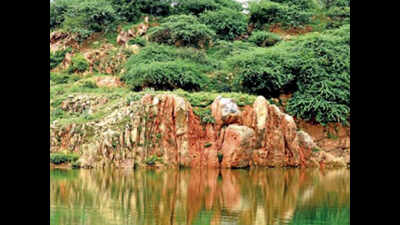
Even though Haryana has the lowest forest cover in the country, the state has diverted the highest percentage of forest land for non-forestry purposes over the last four years in north India.
According to the Forest Survey of India report, 2019, the state has diverted 15.29 sqkm of forest land, or nearly 1% of its total forest cover, for non-forestry purpose.

In the same period of time, Delhi didn’t divert any forest land for non-forestry purpose. Rajasthan and Punjab, on the other hand, diverted 28.34 sqkm and 15.25 sqkm of forest for non-forest activities, respectively. Other neighbouring states, Himachal Pradesh and Uttar Pradesh, diverted just 9.6 sqkm and 1.6 sqkm, respectively.
While forest officials blame road-widening projects and infrastructural development in the state for the diversion, activists alleged the authorities had not compensated the forest area as per norms. “Haryana is one of the states that have witnessed a rapid infrastructural development. Unlike other states, Haryana notified green belts along roads as reserved forests. So, the state has mostly lost forests along the roads for road widening, and construction of highways, flyovers, etc,” said a senior forest official.
“It is short-sightedness of the state government that it only considers infrastructural development as ‘development’. What about quality of life which suffers due to concretisation? If the state government has diverted green belts along the roads for non-forestry purposes, it could have converted other areas into forests. The figures given in FSI report clearly mention that the state government has failed miserably to compensate the loss of forest area,” said Vivek Kamboj from Haryali (an NGO that works on environment).
Forest analyst Chetan Agarwal said that the state should focus on providing legal protection to the Aravalis, and this will automatically increase the forest cover while also saving the eco-fragile mountain range from destruction.
Giving the example of Punjab, Kamboj said, “We can’t simply say that development will cost us forests. We need to learn from other states like Punjab that has been able to increase its forest cover (marginally though). It is because Punjab has focussed on farm forestry in a big way since it is an agricultural state like Haryana. Farm forestry will not only help in reducing carbon footprints but it can also be used by farmers.”
In Gurgaon, 10,329 trees were felled in 2018-19, and over 10,357 trees were cut in 2019-20 (till December 23).
End of Article
FOLLOW US ON SOCIAL MEDIA










Photostories

Hot Picks
TOP TRENDING
Popular Categories
Hot on the Web
Top Trends
Shantanu NaiduRussell WilsonsTom BradyPakistan Cricket FanSuryakumar YadavNobel Peace PrizeMahadev Betting AppNew UPI Transaction LimitRatan Tata DiesPM ModiNarayana MurthyUGC NET Result 2024Management Colleges of IndiaTop Medical Colleges of IndiaTop Engineering Colleges of IndiaTop Pharmacy Colleges of IndiaLive Cricket Score
Trending Topics
Diwali WishesJigra ReviewDussehra WishesVettaiyan OTT ReleaseVettaiyan CollectionVettaiyan ReviewBlack Movie ReviewDevara CollectionBigg Boss 18Deepika PadukoneShraddha KapoorRatan Tata Passed AwayJigra Movie ReviewVettaiyan Movie ReviewSwatantrya Veer SavarkarDussehra 2024Elon MuskKing Legacy CodesUltimate Football Codes October 2024Wordle Answer
Living and entertainment
Latest News
Harris overtakes Trump among suburban voters: Reuters/Ipsos pollSamantha Ruth Prabhu shares playtime with Chinmayi Sripaada's daughter, says 'It took her 4.5 seconds to disown her parents'Dilip Kumar-Saira Banu wedding anniversary: How the legendary actor surprised all by marrying his belovedSpiritual fervour all around as Sun God steers Lord's chariot at TirumalaHappy Dussehra 2024: Images, Quotes, Wishes, Messages, Pictures and GreetingsInfosys to no longer send job offer letters and attachments, the company will ...Jaggery vs honey: Which one is better for weight loss?My mother would love to have a swayamwar for me: Raj AnadkatRanji Trophy: Focus on Shreyas Iyer as Mumbai begin title defenceHappy Dussehra 2024: Top 50+ Wishes, Messages, and Quotes to Share with Your Loved OnesBigg Boss 18: Karan Veer Mehra's comment on Arfeen Khan converting his wife's religion sparks anger; Arfeen says, "Agar ye ghar mein nahi hota main iski band baja deta"Happy Dussehra 202: Top 50 Wishes, Messages and Quotes to share with your loved onesAmitabh Bachchan turns 82: Priyanka Chopra, Prabhas, Kajol, and other celebs extend heartfelt birthday wishes to the legendary starPutin won't discuss Ukraine peace with Germany's Scholz, Berlin saysIndia's Steel City (Jamshedpur) mourns loss of iconic steel tycoon Ratan Tata“A fresh approach”: New York Jets' Interim Head Coach Jeff Ulbrich Replaced Nathaniel Hackett as Offensive Play Caller With Todd DowningKarnataka Congress faces backlash over case withdrawals linked to Hubballi riotsWomen's T20 World Cup: Don't need to be told about NRR, says Shafali Verma
Copyright © 2024 Bennett, Coleman & Co. Ltd. All rights reserved. For reprint rights: Times Syndication Service